
Why Gamification Became Popular in Channel Loyalty Programs
Most channel loyalty programs do not struggle with onboarding. They struggle with keeping dealers, distributors, and retailers engaged after onboarding.
Channel partners join programs during campaigns, install apps, complete registrations, and participate when incentives are high. But in many loyalty ecosystems, activity starts dropping within a few months. A small group of highly active partners continues engaging while the larger network slowly becomes inactive.
This challenge pushed brands toward gamification. Over the last few years, channel loyalty platforms introduced spin wheels, badges, quizzes, milestone rewards, and leaderboards to increase participation and improve engagement. Initially, these mechanics improved app visits and campaign activity. But many organizations soon realized that activity and loyalty are not the same thing.
“A dealer opening an app to spin a wheel does not automatically create long-term engagement.”
This is now becoming one of the biggest discussions in channel loyalty strategy. Industry research increasingly shows that traditional loyalty programs struggle with sustained participation despite large enrollment numbers. At the same time, personalized and behavior-led engagement systems have demonstrated significantly stronger participation rates, in some cases improving engagement performance by up to 3–5× compared to static campaign-led programs.
The market is now moving beyond gamification as entertainment. It is moving toward gamification as behavioral engagement design.
The Problem with Traditional Gamification
Most loyalty programs still use gamification as a surface-level feature instead of a long-term participation system. This creates short-term excitement, but weak long-term engagement. The issue is not the gamification mechanics themselves. The issue is that most systems fail to influence participation behavior over time.
Why Spin Wheels Create Activity but Not Loyalty
Spin wheels work because they create unpredictability and instant gratification. The interaction feels exciting in the moment, which increases campaign participation temporarily. But over time, the behavior becomes repetitive. Partners complete an activity, collect a reward, and leave the platform. The engagement remains transactional instead of becoming habitual.
This is why many channel loyalty programs experience campaign spikes without seeing meaningful improvement in long-term participation consistency. Modern loyalty ecosystems are now shifting toward systems that encourage repeated interaction instead of isolated activity.
Why Leaderboards Often Disengage Average Performers
Leaderboards are highly effective for top-performing dealers and distributors. But they often reduce motivation for the larger partner ecosystem. In many programs, the same participants dominate rankings repeatedly. Average performers eventually stop competing because the system feels difficult to win. This creates concentrated engagement instead of ecosystem-wide participation.
In competitive dealer ecosystems like Mumbai and Bengaluru, where partners already interact with multiple brands, static leaderboard structures often increase disengagement among mid-level participants instead of encouraging consistency. The strongest loyalty systems today focus less on competition alone and more on progression, participation frequency, and behavioral improvement over time.
Why Badge-Based Systems Lose Relevance Quickly
Badges only work when they represent meaningful achievement.
Many loyalty platforms distribute badges too frequently and without behavioral significance. Over time, recognition loses value because every action receives the same level of acknowledgment.
Channel partners stop associating badges with expertise, growth, or contribution.
This is particularly important in relationship-driven distributor ecosystems across Indore and Bhopal, where professional recognition strongly influences participation behavior. Dealers and distributors value visibility when it reflects genuine progress or contribution inside the network.
This is one of the biggest reasons shallow gamification systems lose effectiveness after the initial excitement phase.
What Real Gamification Actually Means
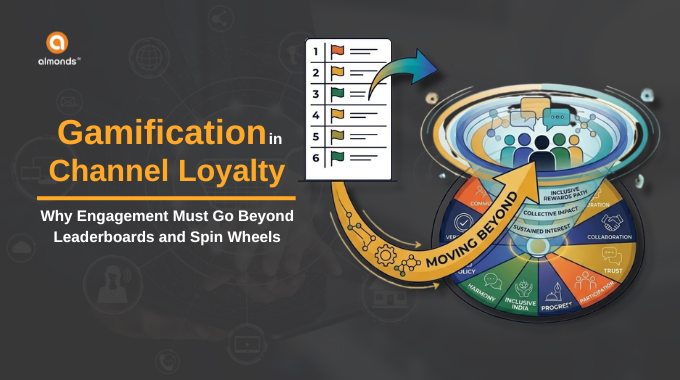
Effective gamification is not about making loyalty platforms entertaining. It is about influencing participation behavior consistently over time. Modern gamification systems focus on habit formation, progress visibility, recognition, and engagement continuity. This changes the role of loyalty platforms completely.
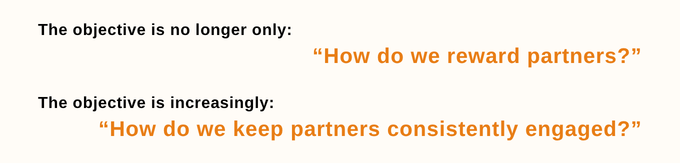
Traditional loyalty programs mainly rewarded transactions. Modern engagement systems increasingly reward participation behavior. This is a major shift in channel loyalty strategy.
High-performing engagement ecosystems are designed around participation psychology. They encourage regular interaction, visible progression, and repeated engagement patterns that gradually become part of the partner’s routine behavior.
It creates stronger long-term engagement than campaign-led reward systems.
The Psychology Behind High-Performing Engagement Systems
The strongest gamification systems understand one important principle: loyalty behavior is driven more by consistency than excitement. Modern engagement ecosystems therefore focus on reinforcing participation behavior continuously instead of depending only on campaign-driven activity.
Visible Progress Creates Motivation
Human behavior responds strongly to visible progress.
When dealers and distributors can clearly track participation milestones, progress levels, and contribution growth, engagement feels meaningful. Progress creates momentum because partners feel invested in continuing the journey. This is why progress-driven engagement systems consistently outperform random reward systems over long periods.
Small Wins Reinforce Participation
Many loyalty programs wait for large achievements before rewarding engagement. Modern gamification systems work differently.They reinforce smaller behaviors such as training participation, onboarding completion, campaign interaction, and regular platform activity. These repeated actions create participation loops that strengthen engagement consistency over time.
This is one reason habit-driven loyalty ecosystems usually sustain engagement longer than transaction-only reward programs.
Recognition Builds Emotional Engagement
Recognition is one of the most underestimated engagement drivers in channel loyalty.
In many dealer and distributor ecosystems, professional visibility and acknowledgment influence participation as strongly as financial incentives. Dealers want to feel recognized for expertise, consistency, and contribution. This is especially visible in relationship-led markets where long-term association strongly influences engagement behavior.
Recognition systems therefore create emotional participation, not just transactional activity.
Consistency Matters More Than Excitement
One-time excitement rarely creates long-term loyalty. Loyalty programs that maintain regular interaction, continuous participation, and visible engagement progression usually outperform systems built around occasional high-reward campaigns. This is where behavioral gamification becomes more powerful than traditional campaign-based engagement.
Industry studies now show that gamified engagement systems can improve participation rates by up to 47% when they combine progression, personalization, and behavioral reinforcement effectively. The important factor is not the mechanic itself. The important factor is what behavior the mechanic reinforces.
How Modern Channel Loyalty Platforms Use Gamification Effectively
The next generation of channel loyalty platforms is moving away from isolated campaign mechanics toward continuous engagement ecosystems. Modern systems focus more on progression than randomness and more on participation consistency than isolated transactions.
Progress-Based Engagement Instead of Random Rewards
High-performing loyalty ecosystems increasingly reward participation progression instead of depending only on chance-based rewards. Partners move through structured engagement journeys where activity builds gradually over time. This creates continuity inside the loyalty ecosystem instead of temporary engagement spikes.
Habit Formation Through Regular Actions
Modern engagement systems encourage regular interaction through recurring participation cycles. Instead of waiting for quarterly campaigns, programs now focus on continuous engagement through learning journeys, campaign participation, and activity consistency.
This approach is particularly effective in digitally active dealer ecosystems across Bengaluru and Mumbai, where partners already interact with multiple digital platforms daily.
Recognition Systems That Reinforce Identity
Recognition-led gamification is becoming increasingly important in B2B loyalty ecosystems.
Modern loyalty platforms now use participation visibility, contribution recognition, and expertise acknowledgment to strengthen partner identity inside the network. This creates stronger long-term retention because participation becomes socially meaningful instead of purely transactional.
Personalized Challenges Based on Partner Behavior
Static campaigns struggle to remain effective across large dealer and distributor ecosystems because not every partner behaves the same way.
Modern gamification systems increasingly personalize engagement journeys based on activity history, participation levels, and behavioral patterns. This improves participation quality because engagement feels relevant instead of generic.
Community and Team-Based Engagement Models
Many modern loyalty ecosystems are also moving toward community-driven engagement structures. Instead of rewarding only individual competition, programs now encourage collaborative participation through regional challenges, shared milestones, and ecosystem-wide engagement goals.
This expands participation beyond top performers and improves engagement consistency across larger partner networks.
Why Behavioral Gamification Improves Loyalty Program ROI
One of the biggest challenges in traditional loyalty programs is inactive participation.
Large enrollment numbers often create the illusion of program success, but inactive users generate limited long-term business value. This is why many organizations continue increasing reward budgets without seeing proportional improvement in engagement quality.
Behavioral gamification improves loyalty ROI because it focuses on participation consistency instead of reward dependency. Loyalty programs become more efficient when they reduce inactivity, increase repeat engagement, and strengthen platform usage behavior over time.
Research now indicates that analytics-driven loyalty optimization can improve loyalty ROI by 25–40% because organizations gain stronger visibility into participation patterns, inactivity trends, and engagement quality. This shift is becoming increasingly important as channel ecosystems continue becoming more digitally active and behavior-driven.
The Role of Analytics and AI in Modern Gamification
Gamification becomes significantly more effective when supported by analytics and behavioral intelligence.
Organizations increasingly want visibility into participation consistency, engagement drop-offs, reward effectiveness, and partner activity patterns. This is driving demand for intelligent loyalty ecosystems that continuously optimize engagement behavior.
Platforms such as GoGames.run and KounterTM by Almonds Ai are helping organizations move toward adaptive participation systems where gamification evolves dynamically based on real behavioral signals instead of static campaign structures. This changes gamification from a feature layer into long-term engagement architecture.
The Future of Gamification in Channel Loyalty Programs
The future of gamification will not depend on adding more engagement features. It will depend on understanding participation behavior more intelligently.
Modern channel loyalty ecosystems are moving toward behavior-led participation systems, adaptive progression models, AI-driven engagement intelligence, and personalized participation journeys.
The strongest loyalty platforms over the next few years will not be the ones with the most mechanics. They will be the ones that best understand why partners participate consistently and how engagement habits develop over time. That is where modern channel loyalty is heading.
Conclusion
Gamification Is Becoming an Engagement System, Not a Feature
Gamification in channel loyalty programs is entering a more mature phase. Leaderboards, spin wheels, and badges still have value. But they cannot sustain engagement on their own.
Modern loyalty ecosystems are increasingly shifting toward behavioral participation systems that reinforce consistency, recognize contribution, create visible progress, and personalize engagement journeys over time.
This is fundamentally changing how channel loyalty platforms are designed. Gamification is no longer just a feature inside loyalty programs. It is becoming the foundation of modern engagement strategy.